MOSH & MOAH Lampante and Pomace Olive Oils - Case Study
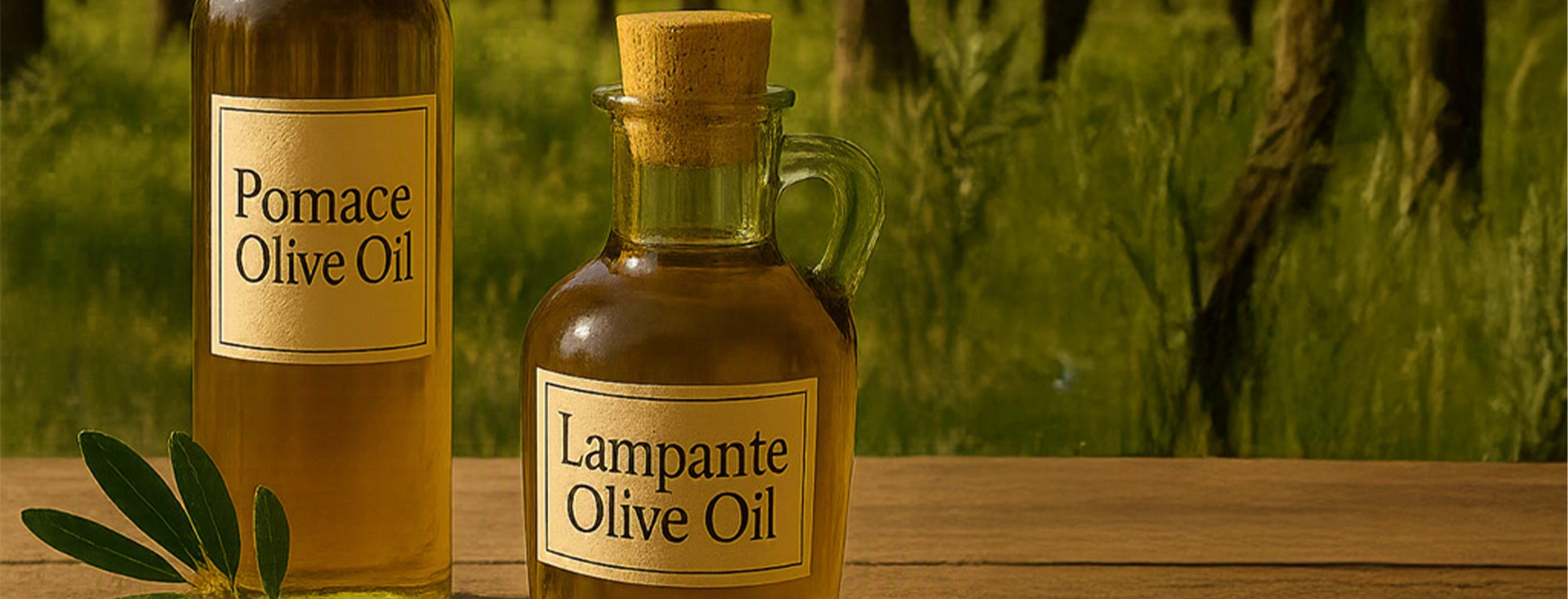
Lampante olive oil is produced by centrifuging what remains after cold-pressing olives for extra virgin oil. To purify for consumption, it may require refining. The solid residue left after lampante extraction – the pomace – still contains recoverable oil, extracted using hexane to yield olive pomace oil. Pomace oil is a valuable product: highly heat-stable and well suited for cooking, its production makes full use of the olives, maximising the yield.
MOSH (Mineral Oil Saturated Hydrocarbons) and MOAH (Mineral Oil Aromatic Hydrocarbons) are contaminants not naturally present in olive oil. They can enter the product through harvesting machinery, lubricants, processing equipment, solvents, foodcontact packaging, storage, as well as through the use of plant protection products such as pesticides and herbicides. Pomace oil is hit hardest: mineral oil hydrocarbons accumulate preferentially in the olive kernel, driving contamination levels up to 50 times higher than in lampante olive oil. For pomace oil in particular, entering the refinery at contamination levels that can be orders of magnitude above the regulatory limit, a dedicated purification step is not optional; it is a market access requirement.
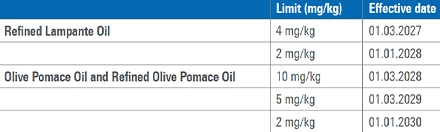
On 13 May 2026, the EU Standing Committee on Plants, Animals, Food and Feed (SCoPAFF) adopted binding EU-wide maximum limits for MOAH in food, including specific limits for olive pomace oil and lampante olive oil.
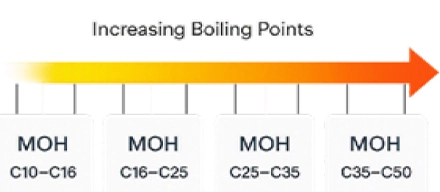
For edible oils, including olive lampante and pomace oil, a progressive reduction of limits is established over the coming years, making compliance increasingly challenging. MOAH compounds are of particular toxicological concern due to their potentially genotoxic and carcinogenic properties. Mineral oil hydrocarbon (MOH) contaminants are classified in sub-fractions according to the number of carbon atoms in the molecule. As shown in the picture below, these fractions span a wide boiling range and accumulate across different molecular weight fractions.
Standard refining steps such as deodorization reduce off-flavors and odors and free fatty acids but are not suitable to strip mineral oil
hydrocarbons > C25. This makes targeted removal technically demanding.
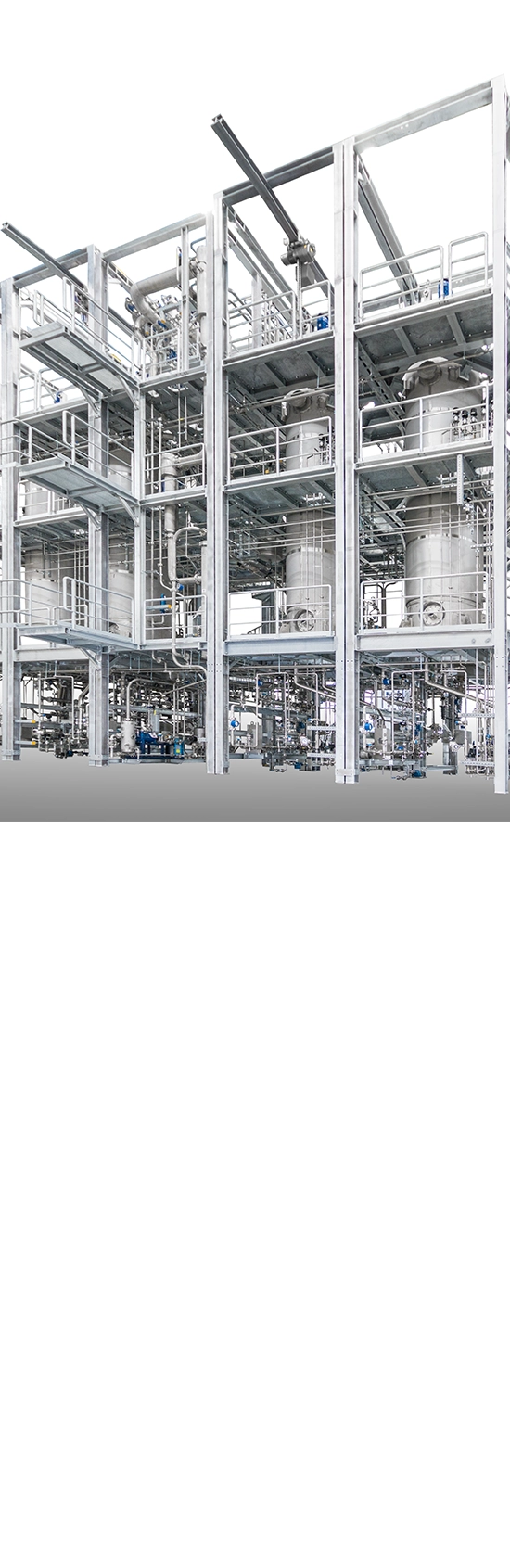
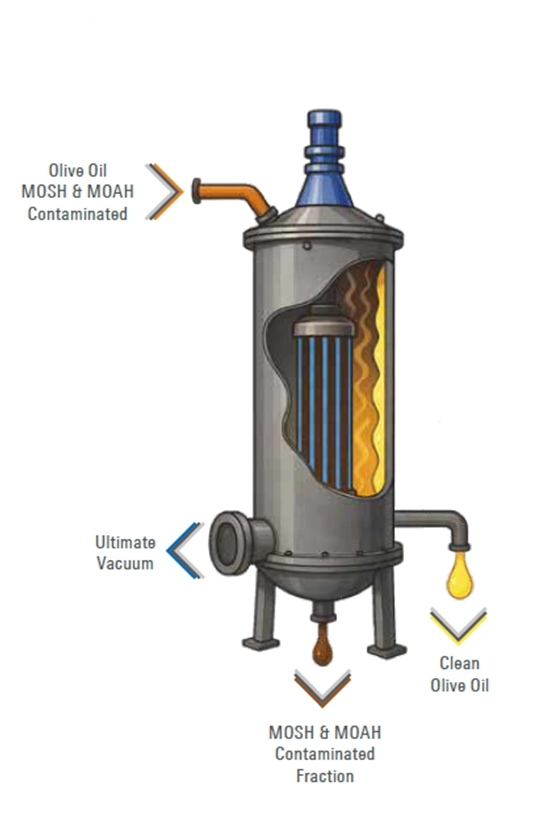
VTA & UIC are the global leader in industrial short path and molecular distillation as well as high vacuum technologies, with proven solutions for contaminant reduction in edible oils. This leadership is based on proven industrial reliability and customer-specific support throughout the entire project lifecycle. Short path / molecular distillation is a proven process for the effective removal of MOAH from olive lampante and pomace oil.
VTA & UIC have many years of extensive industrial experience in the effective reduction of MOAH in both lampante and pomace oils. Due to the presence of long-chain hydrocarbons with very high boiling points, this separation task is particularly challenging. To address this, UIC and VTA have optimized the design of their short path evaporators to achieve extremely low vacuum levels, significantly reducing the boiling temperatures of the contaminants.
This enables gentle processing conditions under which short, middle, and even long-chain MOSH and MOAH fractions
(> C25) can be effectively removed. As a continuous process, short path / molecular distillation ensures very short residence times, minimizing thermal degradation and preserving the fatty acid profile, color, and oxidative stability of the oil. Being a purely physical process, it does not require the use of chemical additives. Moreover thermally generated carcinogenic by components, such as GE (Glycidyl Esters) and 3-MCPD are not formed by the VTA/UIC process and if already present in the crude, these undesired matter is removed as well. Although MOSH is not yet subject to binding regulatory limits, it codistills in the same process step. Producers therefore not only ensure MOAH compliance but also simultaneously reduce MOSH levels, going beyond current regulatory requirements.
UIC and VTA have demonstrated the reduction of MOAH concentrations to 10 ppm, 5 ppm, and even below 2 ppm. They support customers throughout the entire project lifecycle, from laboratory trials and pilot testing to plant design, engineering, manufacturing, and commissioning, all carried out inhouse at their German headquarters. VTA & UIC offer internally developed and manufactured short path and molecular distillation as well as high vacuum technologies, proven in industrial operation over many years and thousands of metric tons, ensuring effective MOAH reduction while preserving product quality and maximizing yield under stable and industrially robust operating conditions.
Customer-specific requirements are systematically considered during piloting, scale-up, and the design of industrial-scale plants.
Your olive oil.
Our short path and molecular distillation expertise.
Compliance secured.