Refining Fragnances and Flavors - Case Study
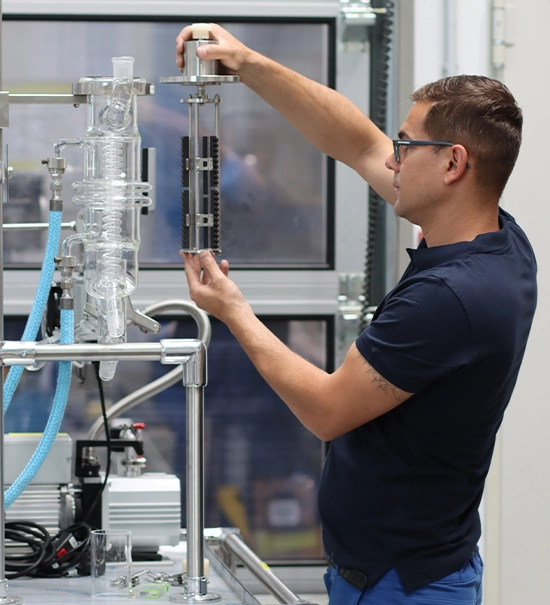
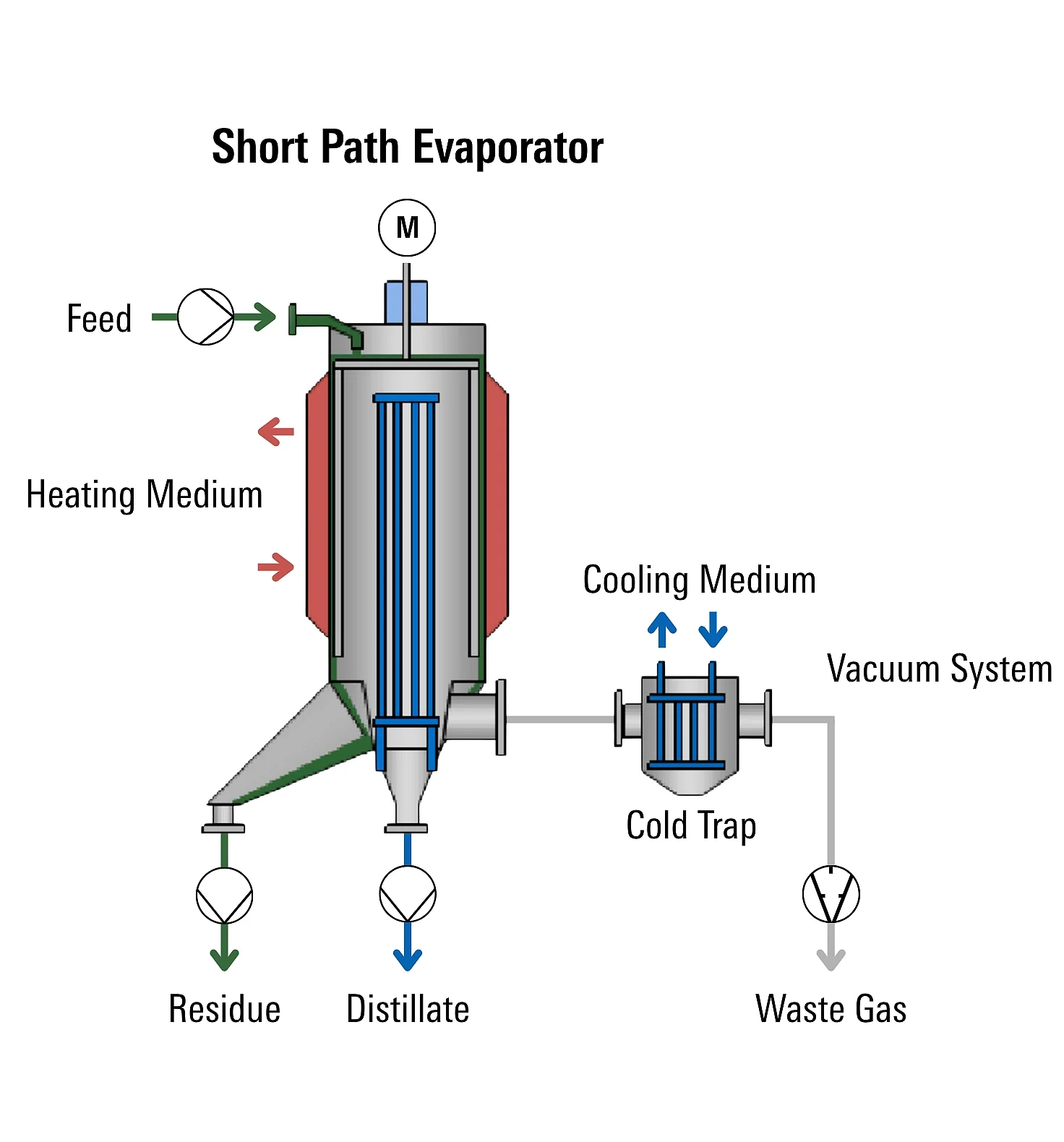
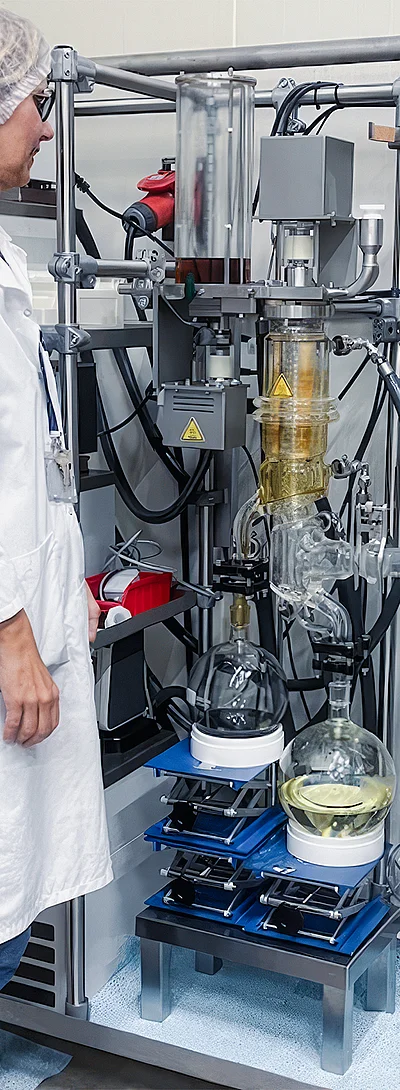
Molecular distillation is a thermal separation process carried out on heated cylindrical apparatus equipped with wiping system and internal condenser. As a liquid flows down the heated inner wall of the apparatus, the wipers spread it into a thin, uniform film. Vacuum is applied to the distillation system, the lower boiling fraction starts to evaporate and is condensed again on the internal condenser.
The process separates product mixtures into two fractions: the higher boiling concentrate fraction and the lower boiling distillate fraction. The technology is known as molecular distillation or short path distillation and is a variant of thin film distillation. Low distillation pressure and short residence time allow gentle distillation of thermal sensitive product mixtures.
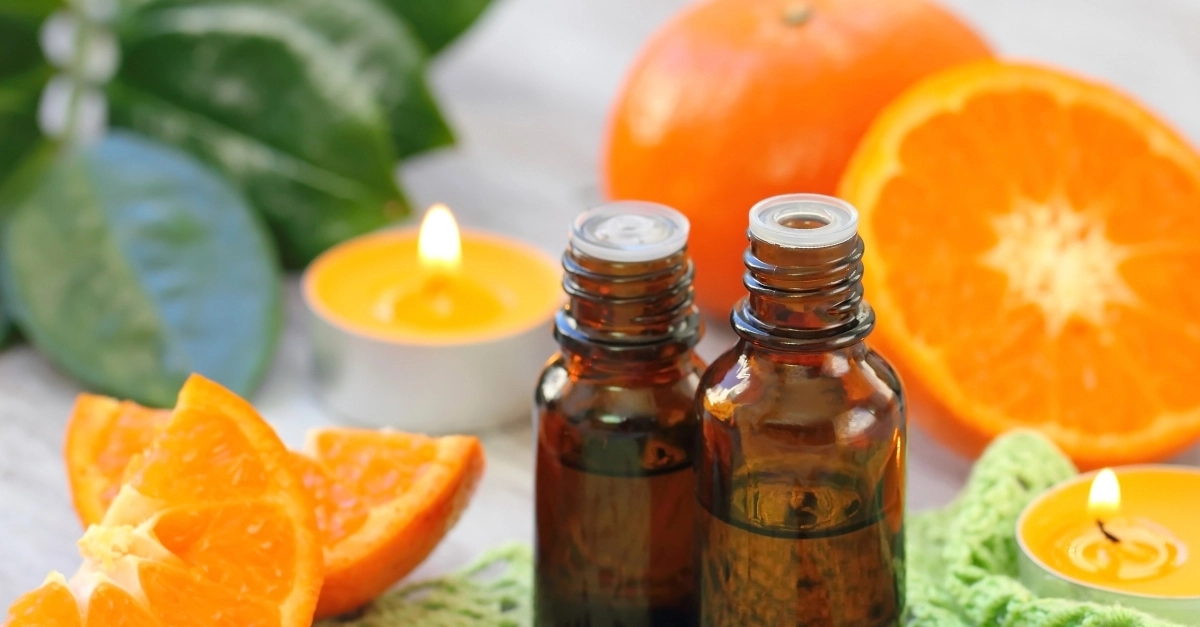
Essential oils and absolutes such as lavender and patchouli oil often change their scent and darken during storage and processing. These decomposition products impair the aroma and can be removed at low temperature and reduced pressure in a short path evaporator.
Coffee oil is an example of an oil obtained by pressing, it is consisting of free fatty acids, triglycerides, and the diterpenes afestrol and kahweol. The flavoring diterpenes can be concentrated by removing the free fatty acids and triglycerides by distillation.
Solvent extraction of plants like ginger, vanilla, jasmine, rose and lavender is often giving extracts which are too sticky and dark for direct further processing. Distillation processes can be used for wax removal and color improvement of those kinds of extracts.
A residual butter is left over from the coco absolute extraction process and still has unique olfactive molecules. Instead of disposing, it is upcycled by molecular distillation. Due to the low thermal stress, the distillate keeps all the chocolatey facets. Compared to most other dark brown cacao extracts, the upcycled cocoa butter is colorless.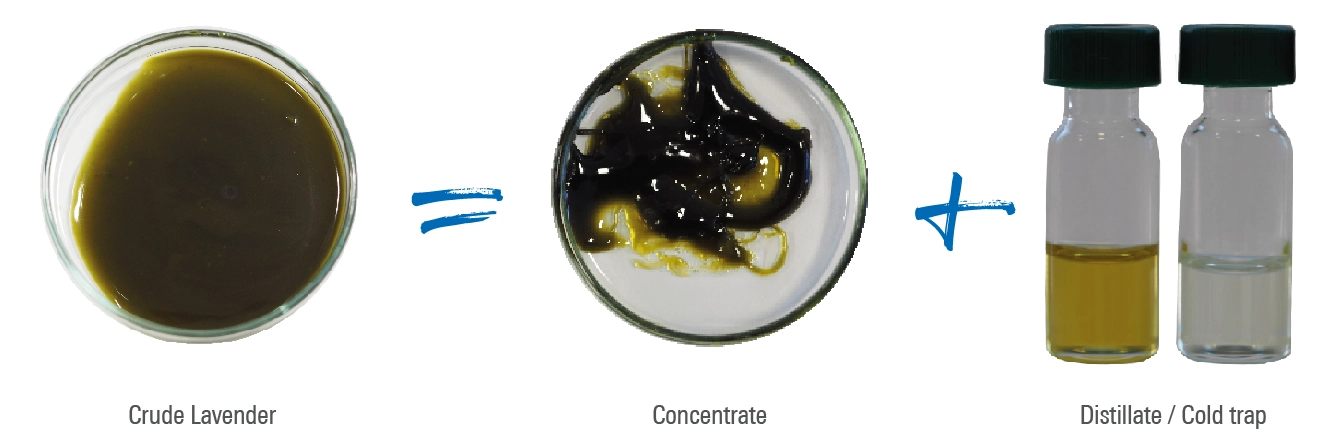
Images provided by Mrs. Debczak.²
Founded in 1850, the French Robertet Group is a familyowned company in Grasse, whose main activities are the sourcing and transformation of plant ingredients into volatile and nonvolatile natural extracts. These extracts are then used for the creation of flavors, fragrances and active ingredients for the health and beauty sectors. The expertise ranges from sources seeds, leaves and flowers to the continuously improved industrial processes extraction, hydro-distillation, purification, molecular distillation, CO2 extraction and co-distillation. Robertet is now the pioneer in natural molecules and organic essential oils with a market share of 25 %.
1. Which kind of extracts do you refine with molecular distillation?
There is a wide range of products. For instance, crude extracts like concretes, absolutes and essential oils can be refined to recover high character impact colorless heart fractions. Alternatively, blends of these extracts on specific carriers can be distilled to produce co-distillates e.g. a selective portion of natural volatiles trapped onto carriers.
2. How long does the cleaning and maintenance of the equipment take?
There is no rule of thumb for the cleaning duration.
It largely depends on the viscosity of the materials processed through the equipment and how easily they can be removed during cleaning procedures, ensuring the system is thoroughly deodorized and ready for the next production run. From a maintenance perspective, short path distillation is a technology in which vacuum tightness is of key importance. Through preventive maintenance, operational experience, and ongoing training, we have ensured a smooth and
efficient workflow.
3. How many different products do you process on the equipment?
In our distillation unit, we currently process 250 products through molecular distillation technology.
4. How high is the demand for colorless and purified products?
The demand and promotion of colorless, purified / concentrated extracts has become cornerstone nowadays in fine fragrance and flavor industry, such ingredients not only ensure visual consistency but also provide a unique sensory experience to the consumers who often consider clear and concentrated products as key indicators of purity, craftsmanship, and high-end quality.
1. Browning, R. (2004). Application Portrait - Short path distillation for flavours and fragrances
2. Debczak, A. (2022). Molecular Distillation of Lavender Supercritical Extracts, molecules
3. Laksmono, J. A. (2007). Patchouli Alcohol enrichment from patchouli oil using molecular distillation unit. Jurnal Teknologi Industri Pertanian,.
4. Maestro, Y. (2014). Le Cannet Patentnr. US 8,709,502 B2.
5. Marx, C. (March 2022). Perfumer Notes: Cocoa Butter Colorless. Perfumer & Flavorist.
6. Rincon, M. A. (2011). Fracionamento do Óleo de Café Verde por Destilacoao Molecular. Campinas.