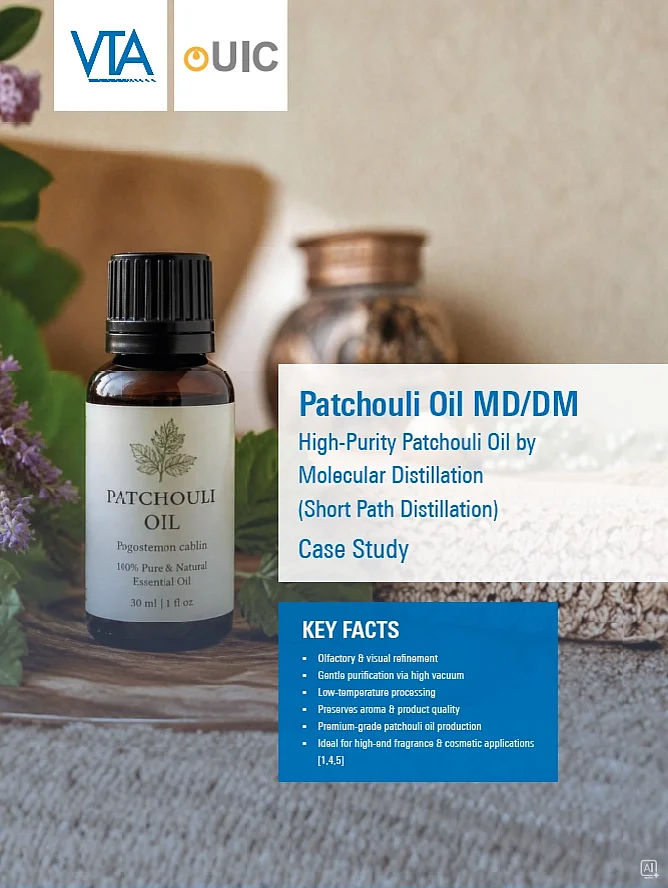
Patchouli Oil MD/DM - Case Study
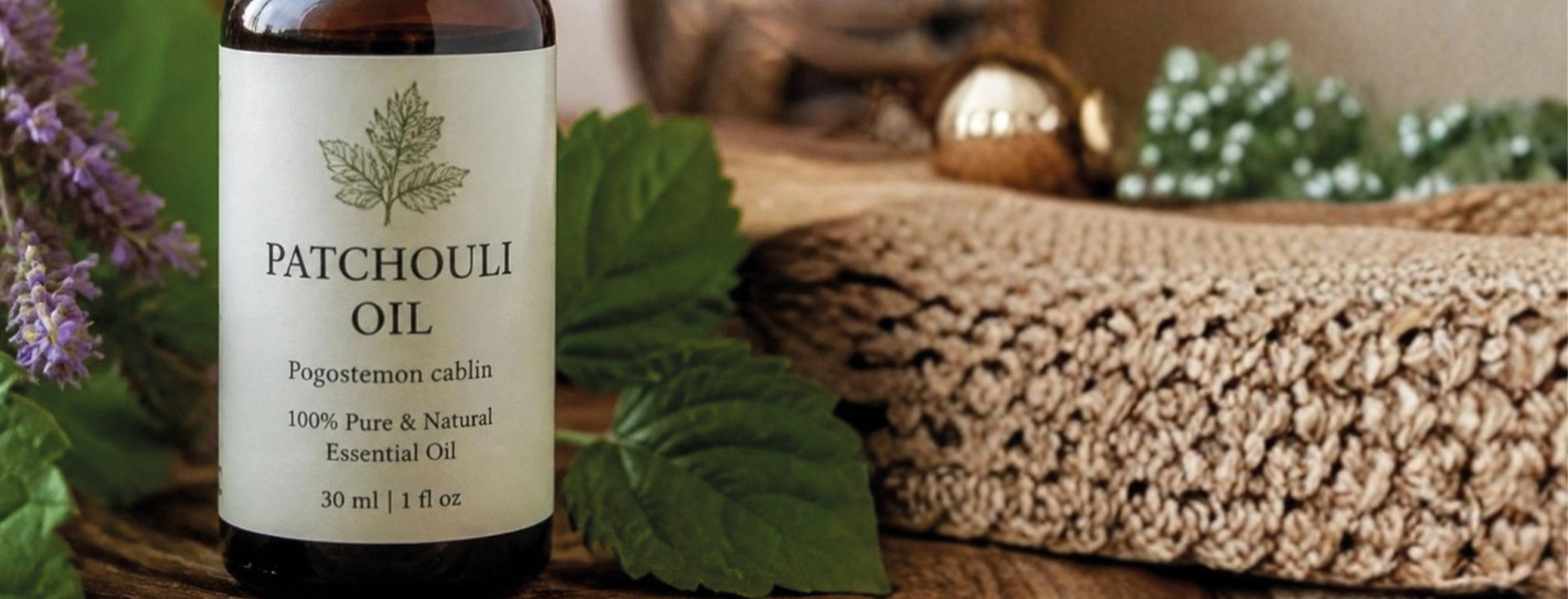
Patchouli Oil MD, sometimes also referred to as Patchouli Oil DM (derived from the French term distillation moléculaire), designates amolecularly distilled grade of patchouli oil. Closely related specialty grades include Patchouli Heart or Patchouli Coeur products. These refined patchouli materials are widely used in modern perfumery and are valued for their cleaner, more refined olfactory character compared with conventional patchouli oil.
Molecular Distillation and Short Path Distillation
In the fragrance, flavor, cosmetic, and essential oil industries, the terms molecular distillation and short path distillation are often used interchangeably. Commercial patchouli oil grades marketed as “Molecular Distilled” (MD) are frequently associated with short-path distillation processing. The abbreviations MD and DM are widely used throughout the fragrance industry to distinguish these refined grades from conventional steamdistilled patchouli oils.
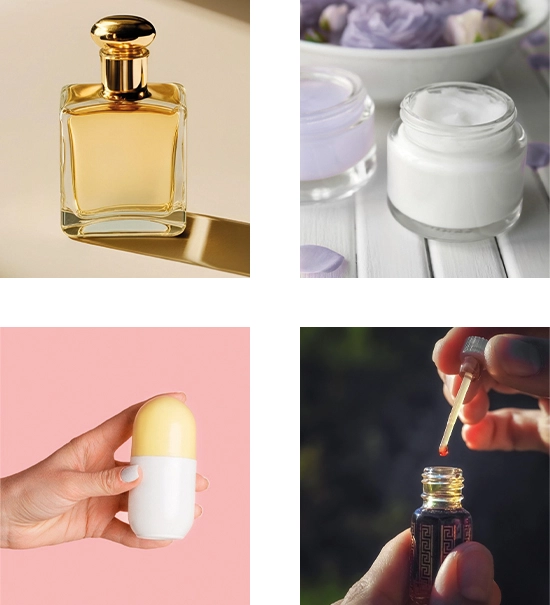
Patchouli Oil MD is valued primarily for its smooth woody-earthy, sweetherbaceous, and balsamic odor profile. It is widely used in perfumes, deodorants, and premium cosmetic products and also finds application as a flavor ingredient in selected food and beverage formulations. Beyond its fragrance contribution, patchouli oil is widely valued as a fragrance component and fixative due to the low volatility of its key constituents, particularly patchoulol. It helps anchor more volatile fragrance components and contributes to improved longevity of perfume compositions. In addition, various studies have reported biological activities including antimicrobial, anti-inflammatory, and insect-repellent effects, contributing to the continued interest in patchouli oil across fragrance, cosmetic, and related specialty ingredient sectors.
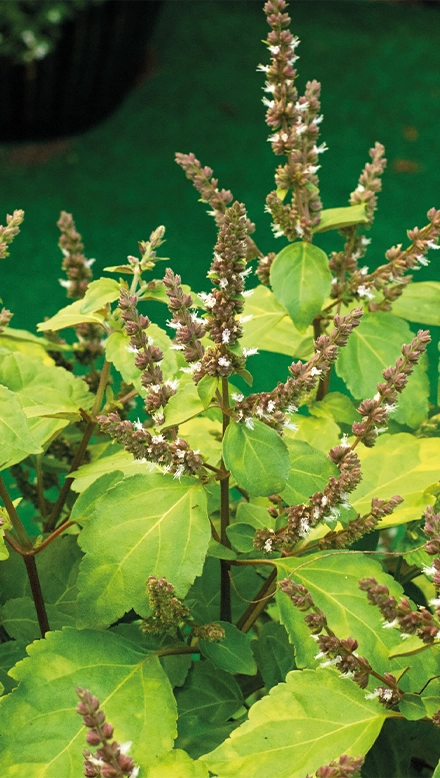
1. Natural Variability and Product Quality
As a natural agricultural product, patchouli oil obtained from Pogostemon cablin may exhibit significant variations in composition and quality depending on raw material origin and processing conditions. These variations can influence patchoulol concentration, color, odor profile, and overall product performance. In addition, certain lots may exhibit a darker appearance and contain undesirable odor-active components that limit their suitability for premium fragrance and cosmetic applications.
2. Thermal Sensitivity During Purification
Achieving effective purification while minimizing thermal stress is important for maintaining product quality and sensory performance. Molecular distillation addresses this challenge through high-vacuum operation, low processing temperatures, and short residence times.
3. Need for Product Upgrading
To meet the requirements of premium fragrance, cosmetic, and specialty ingredient applications, crude patchouli oil often requires further refinement. Desired improvements may include higher patchoulol concentrations, enhanced color quality, and a cleaner, more balanced olfactory profile.
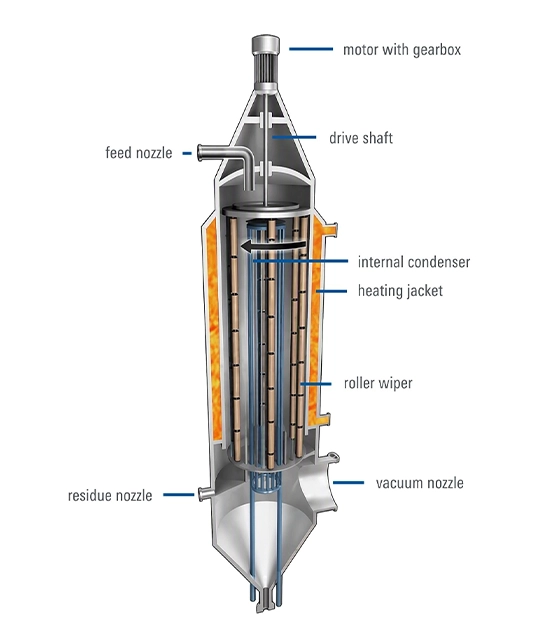
A short path distillation (molecular distillation) process operated under high vacuum provides an exceptionally gentle method for upgrading crude patchouli oil while preserving its valuable aroma constituents. The combination of low operating temperatures, short residence times, and high separation efficiency makes molecular distillation particularly suitable for processing patchouli oil, where both product quality and thermal protection are critical.
High vacuum operation
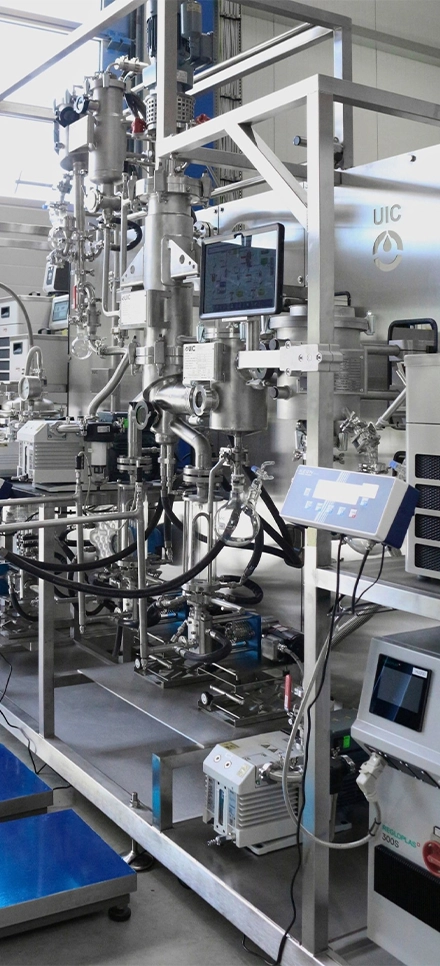
One important application of molecular distillation is the selective concentration of patchoulol, the key value-defining component of patchouli oil. By taking advantage of the differing volatilities of the oil‘s components, lighter terpene-rich fractions can be separated from the feedstock while the remaining fraction becomes progressively enriched in patchoulol and other higher-boiling components. This enables the production of premium patchouli grades with significantly elevated patchoulol concentrations, making them particularly attractive for fragrance, cosmetic, and specialty ingredient applications.
Product Refinement
Color, Clarity & Olfactory Improvement
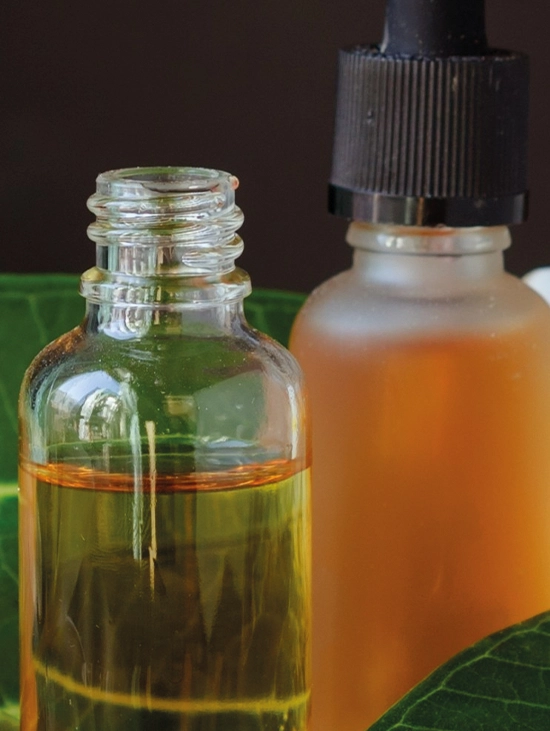
Molecular distillation is also widely employed to improve the visual and olfactory quality of patchouli oil. Under highvacuum conditions, the desired volatile aroma components can be recovered while darker non-volatile materials, waxes, and other heavy impurities are retained in the residue stream. The result is a refined molecularly distilled patchouli oil characterized by a lighter color, a cleaner odor profile, and improved suitability for demanding fragrance and cosmetic formulations. Commercial molecularly distilled patchouli oils are specifically marketed for applications where color reduction, improved clarity, and enhanced sensory quality are required. The exact process configuration ultimately depends on the desired product specification. Whether the goal is patchoulol enrichment, color improvement, olfactory refinement, or a combination thereof, short path distillation provides a flexible and thermally gentle technology for
upgrading crude patchouli oil into higher-value specialty grades.
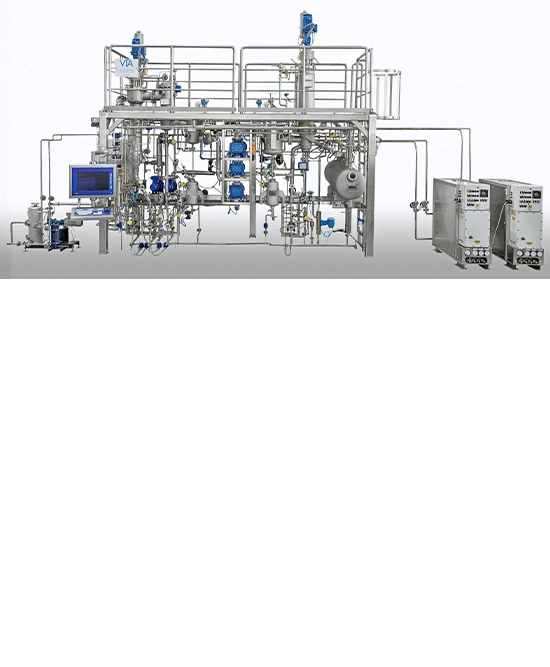
Our expertise in short-path and molecular distillation reaches back to the very beginnings of the technology. The roots of today’s UIC, a 100% subsidiary of VTA, date back to the first developments in vacuum and short path distillation at Leybold in Cologne in 1952. Since then, this know-how has been continuously developed and transferred into demanding industrial separation processes. Patchouli oil is part of this heritage. UIC has been working with the molecular distillation of patchouli oil for decades. In fact, the designation“Patchouli Oil MD” or “Patchouli Oil DM”, today used to describe molecularly distilled patchouli oil, was originally established in connection with our work in this field. What began as pioneering purification work has developed into decades of practical experience in achieving exceptionally high product quality through short path distillation.
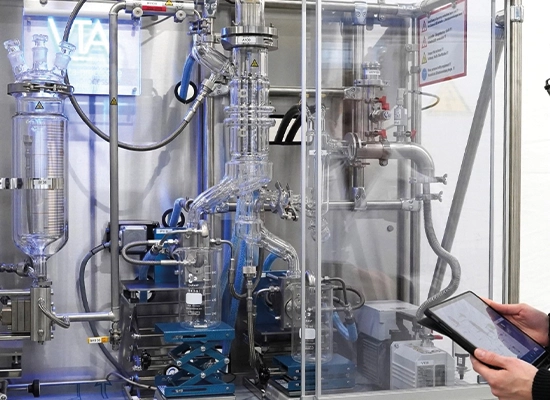
Skip the theoretical guesswork. Send a small sample of your crude patchouli oil to our state-of-the-art Technology Center. We will conduct a customized trial distillation to demonstrate the achievable purity, color improvement, and yield potential of your specific material. You are welcome to witness the trials in person.
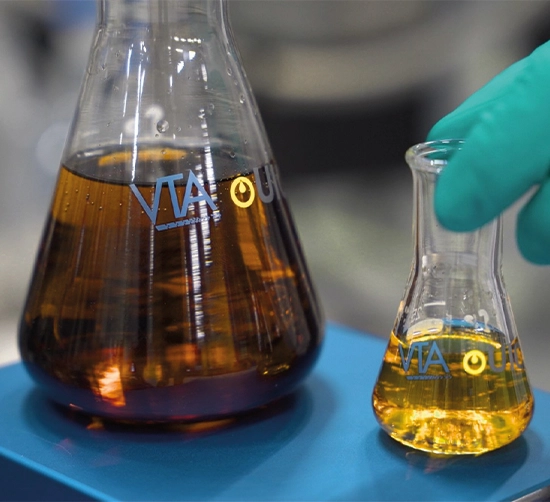
From there, we can discuss toll distillation, pilot-scale validation, or the design of a dedicated production system. From glass laboratory units to pilot plants and full industrialscale systems, we cover the complete throughput range required for patchouli oil processing, from a few grams per hour in research applications to several hundred kilograms per hour in continuous production.
Patchouli Oil MD has a history. And we are proudly part of its origin.
If molecularly distilled patchouli oil is your benchmark, work with the experts who helped establish it.